<?xml version="1.0" encoding="utf-8"?><feed xmlns="http://www.w3.org/2005/Atom" ><generator uri="https://jekyllrb.com/" version="4.4.1">Jekyll</generator><link href="https://leonardoflores.net/feed.xml" rel="self" type="application/atom+xml" /><link href="https://leonardoflores.net/" rel="alternate" type="text/html" /><updated>2026-07-04T13:01:54+00:00</updated><id>https://leonardoflores.net/feed.xml</id><title type="html">Leonardo Flores</title><subtitle>Leader, Scholar, Educator, Creator.</subtitle><entry><title type="html">E-Poetry Collaboration with Abu Bakr Sadiq and Podcasts</title><link href="https://leonardoflores.net/posts/blog/publications/collaboration-with-abu-bakr-sadiq-and-podcasts.html" rel="alternate" type="text/html" title="E-Poetry Collaboration with Abu Bakr Sadiq and Podcasts" /><published>2026-07-04T00:00:00+00:00</published><updated>2026-07-04T00:00:00+00:00</updated><id>https://leonardoflores.net/posts/blog/publications/collaboration-with-abu-bakr-sadiq-and-podcasts</id><content type="html" xml:base="https://leonardoflores.net/posts/blog/publications/collaboration-with-abu-bakr-sadiq-and-podcasts.html"><![CDATA[<p>Earlier this year, I received an intriguing invitation from Soham Patel &mdash; the Editor-in-Chief of <em>The New River Journal</em> &mdash; and Nurain Ọládèjì &mdash; the student editor who selected the poem &mdash; to collaborate with Nigerian poet Abu Bakr Sadiq on &#8220;a new section in each issue that we are currently calling &#8216;collaborative refractions,&#8217; a project in which we take a &#8216;traditional&#8217; submission and work to &#8216;elitify&#8217; it.&#8221; Read more about this in the <a href="https://thenewriverjournal.org/issue-l-editors-note/" target="_blank" rel="noopener">Editor&#8217;s Note</a>.</p>

<p><a href="https://thenewriverjournal.org/" target="_blank" rel="noopener"><em>The New River Journal</em></a> is the oldest continuously operating electronic literature publication in the field &mdash; founded by Ed Falco over 30 years ago &mdash; and this collaborative refraction is part of a redesign for the journal that creates a bridge between traditional and electronic literature. And Sadiq&#8217;s poem is such a tender, intimate poem about distance in a relationship that it instantly got my e-poetic creative brain going. Readers, I jumped on the opportunity! And so began a fruitful collaboration that resulted in this publication of the poem in the landmark 50th issue of <em>The New River Journal</em>.</p>

<p>Before our first meeting, I focused on carefully reading the poem and thinking of ways in which the digital presentation could focus the reader&#8217;s attention on Abu Bakr&#8217;s carefully chosen words, phrases, verses, strophes, and tactical use of space on the page. I worked with ChatGPT to create an initial code engine that would reveal the poem over time and shared that sketch with him. That became the basis for fruitful meetings in which we explored different ways of further enhancing specific features of the poem, as we hand and vibe coded using VS Code and GitHub Copilot to test and adjust different ideas until we had achieved our vision. In our conversations with the editors, we considered adding elements of sound, a recorded reading, and a potential translation into Spanish, but decided to keep the focus on the presentation of the language to guide the reader&#8217;s own dance with the poem.</p>

<p>You can <a href="https://thenewriverjournal.org/abu-bakr-sadiq-with-leonardo-flores/" target="_blank" rel="noopener">read the e-poem here</a>.</p>

<p>And then we had the pleasure of being interviewed by Lauren Emo and Makenzie Anderson for <em>The New River Podcast</em>, resulting in two episodes that came out in June:</p>

<ul>
  <li>The Future of E-Lit, with Leo Flores (<a href="https://podcasts.apple.com/us/podcast/the-future-of-e-lit-with-leo-flores/id1822328067?i=1000772906852" target="_blank" rel="noopener">Apple</a>, <a href="https://open.spotify.com/episode/6rXZDmU2Iu0ONJJ7do9gfu" target="_blank" rel="noopener">Spotify</a>)</li>
  <li>Writing the Cyborg, with Abu Bakr Sadiq (<a href="https://podcasts.apple.com/us/podcast/writing-the-cyborg-with-abu-bakr-sadiq/id1822328067?i=1000774892087" target="_blank" rel="noopener">Apple</a>, <a href="https://open.spotify.com/episode/0iPbk5VgdGAV17LL3JTUBD" target="_blank" rel="noopener">Spotify</a>)</li>
</ul>

<p>You can learn more about our process &mdash; and much more &mdash; in these wonderfully researched and produced interviews.</p>

<p>Enjoy!</p>]]></content><author><name></name></author><category term="publications" /><summary type="html"><![CDATA[Earlier this year, I received an intriguing invitation to collaborate with Nigerian poet Abu Bakr Sadiq on a "collaborative refraction" for the landmark 50th issue of The New River Journal.]]></summary></entry><entry><title type="html">Presentation and Workshop at Weird Modernisms Conference</title><link href="https://leonardoflores.net/posts/blog/presentations/presentation-and-workshop-at-weird-modernisms-conference.html" rel="alternate" type="text/html" title="Presentation and Workshop at Weird Modernisms Conference" /><published>2026-07-01T00:00:00+00:00</published><updated>2026-07-01T00:00:00+00:00</updated><id>https://leonardoflores.net/posts/blog/presentations/presentation-and-workshop-at-weird-modernisms-conference</id><content type="html" xml:base="https://leonardoflores.net/posts/blog/presentations/presentation-and-workshop-at-weird-modernisms-conference.html"><![CDATA[<p>On July 1-4, I will be giving a talk, presiding a panel, and offering a workshop at the BAMS/MSA Joint Conference in Loughborough, UK. The conference focus is Weird Modernisms.</p>

<h2>Presentation: &#8220;When Vers is Libre from the Page&#8221; &mdash; July 1, 2026</h2>

<p>Modernist poetics of innovation occurred in the context of print technologies and led to experimentation with poetic form, typography, the use of the typewriter, and the normalization of free verse. Digital media technologies offer opportunities for further experimentation in poetic form, extending Modernism well into the 21st century. This paper builds on Marjorie Perloff&#8217;s <em>21st Century Modernism: The &#8220;New&#8221; Poetics</em> (2002) and Jessica Pressman&#8217;s <em>Digital Modernism: Making it New in New Media</em> (2014) to identify ways in which digital poetry continues the Modernist project by innovating poetic writing and form in ways that leverage digital media&#8217;s capabilities. This includes writing with variables to incorporate randomization in computer generated text, the presentation of poetic lines in time and space as seen in videopoetry, textual movement in kinetic typography, the incorporation of the readers&#8217; input in interactive textual interfaces, and other ways in which programming can be used to rethink free verse beyond the limits of the print or virtual page. Given the naturalization of the printed and virtual page in education and literature and the secondary orality of performance poetry delivered through sound and video based media, digital poetry comes across as weird, uncanny, strange for readers whose literacy training and aesthetic values are built on older media forms, such as print, voice, and the body. And yet, the way in which poetic form can be reimagined for digital media gives hope for the continuing influence of Modernist poetics and poetic innovation.</p>

<div style="position:relative;width:100%;padding-bottom:56.25%;margin:1.5rem 0;">
  <iframe id="weirdmod-slides" src="https://docs.google.com/presentation/d/1q6xZ1QjpsjVU7yThYTntCOxJZ_ERK_8zEAg3qdqKCKQ/embed?start=false&loop=false&delayms=3000" frameborder="0" allowfullscreen style="position:absolute;top:0;left:0;width:100%;height:100%;"></iframe>
</div>
<p style="text-align:center;margin-top:-0.5rem;margin-bottom:1.5rem;">
  <button onclick="(function(){var el=document.getElementById('weirdmod-slides');if(el.requestFullscreen)el.requestFullscreen();else if(el.webkitRequestFullscreen)el.webkitRequestFullscreen();})();" style="background:#FDE801;border:none;padding:8px 20px;font-weight:bold;cursor:pointer;border-radius:4px;margin-right:0.75rem;">&#x26F6; Fullscreen</button>
  <a href="https://docs.google.com/presentation/d/1q6xZ1QjpsjVU7yThYTntCOxJZ_ERK_8zEAg3qdqKCKQ/edit?usp=sharing" target="_blank" rel="noopener" style="display:inline-block;background:#333;color:#fff;padding:8px 20px;font-weight:bold;text-decoration:none;border-radius:4px;">&#x29C9; Open presentation</a>
</p>

<h2>Panel Moderation: &#8220;Modernist Poetics and the Digital&#8221; &mdash; July 2, 2026</h2>

<p>This panel of four papers by scholars from Canada, the US and Poland, considers modernism from different points in time in relation to digital media, from its origins to its afterlife, looking at digital visualization from a myriad of perspectives.</p>

<h2>E-Poetry Workshop &mdash; July 3, 2026</h2>

<p>In this workshop, participants will learn two things: how to adapt an e-poem to use its form to create new works, and how to use AI to generate code to create new poetic forms that take advantage of the affordances of digital media. E-poetry is an experimental practice that extends Modernist poetics into digital media by creating new poetic forms that incorporate text generation, interactivity, animation, multimodality, networked data, and other aspects of digital culture. In the first part of the workshop we will use published open-access works, such as &#8220;Taroko Gorge&#8221; by Nick Montfort (<a href="https://nickm.com/poems/taroko_gorge/" target="_blank" rel="noopener">https://nickm.com/poems/taroko_gorge/</a>), and learn how to modify the code to create new poems based on the original&#8217;s e-poetic form. In the second part, we will also learn how to prompt an AI system to generate valid HTML code, along with a code editor, to create a unique work of e-poetry. These practices are examples of cyborg writing because we integrate human and artificial intelligence to produce literal machines made of words. This workshop will offer participants a unique opportunity to learn basic code literacy and will offer tools and techniques that lower the technical bar to produce original works of digital literature. No experience in programming is needed to participate in this workshop.</p>

<h3>Workshop Resources:</h3>
<ul>
  <li><a href="https://iloveepoetry.org/" target="_blank" rel="noopener">I &#9829; E-Poetry</a></li>
  <li><a href="https://leonardoflores.net/posts/blog/resources/a-cyborg-digital-writing-primer.html">A Cyborg Digital Writing Primer</a></li>
</ul>]]></content><author><name></name></author><category term="presentations" /><summary type="html"><![CDATA[On July 1-4, I will be giving a talk, presiding a panel, and offering a workshop at the BAMS/MSA Joint Conference in Loughborough, UK. The conference focus is Weird Modernisms.]]></summary></entry><entry><title type="html">New Publication: AI and the Humanities: A Framework for Language and Literary Scholarship</title><link href="https://leonardoflores.net/posts/blog/publications/new-publication-ai-and-the-humanities-framework.html" rel="alternate" type="text/html" title="New Publication: AI and the Humanities: A Framework for Language and Literary Scholarship" /><published>2026-06-06T00:00:00+00:00</published><updated>2026-06-06T00:00:00+00:00</updated><id>https://leonardoflores.net/posts/blog/publications/new-publication-ai-and-the-humanities-framework</id><content type="html" xml:base="https://leonardoflores.net/posts/blog/publications/new-publication-ai-and-the-humanities-framework.html"><![CDATA[<p>During the 2026-27 academic year, I co-chaired, with Lisa Marie Rhody, the <a href="https://mlaai.hcommons.org/research-working-group/" target="_blank" rel="noopener">AI and Research Working Group</a> (AIRWG), a group assembled by the <a href="https://mlaai.hcommons.org/" target="_blank" rel="noopener">MLA Task Force on AI in Teaching and Research</a>. Its mission: "This working group is charged with evaluating generative AI's impact on research and scholarly publishing practices to identify principles that can guide policies for humanities researchers' use of AI."</p>

<p>With the publication of "<a href="https://mlaai.hcommons.org/ai-and-the-humanities-a-framework-for-language-and-literary-scholarship/" target="_blank" rel="noopener">AI and the Humanities: A Framework for Language and Literary Scholarship</a>" our mission is accomplished!</p>

<p>Before I say anything else, I want to express my gratitude to the 21 other members of the Working Group for the many conversations, collective thinking, collaborative writing, and then substantive revising and editing to produce a lean, useful framework. I'm also grateful for the guidance and support we received from our MLA Liaisons: Angela Gibson, Laura Kiernan, and Anatole Shukla. Thanks to all the MLA committees and members that provided feedback when we circulated the draft. And I'm most grateful for co-chair Lisa Marie Rhody, who was such a great collaborator as we coordinated the Working Group's efforts this whole academic year. Thank you all for your myriad contributions!</p>

<p>We will be presenting and discussing the Framework at the following events:</p>
<ul>
  <li><a href="https://www.mla.org/Events/Webinars-and-Conversations/MLA-Professional-Development-Webinars" target="_blank" rel="noopener">Webinar on June 30, 2026 at 2:00 EDT</a>.</li>
  <li>Workshop at the MLA 2027 Convention.</li>
</ul>

<p>I hope you all find it useful as a tool to think through issues concerning the use of AI technologies in research and scholarship, regardless of your stance on AI. Whatever your position might be, especially those who completely refuse or reject it, please <a href="https://marcwatkins.substack.com/p/we-shouldnt-destroy-ourselves-fighting" target="_blank" rel="noopener">consider how we talk to each other about AI</a> as you think about formulating a response.</p>

<p>My own stance on AI is critical, but as a pragmatist. I recognize and agree with many (not all) of the criticisms of these technologies and the companies that develop them. And I believe we should continue to pressure those corporations to do better, in all areas.</p>

<p>I also believe we must learn to use AI responsibly.</p>

<p>And I hope this Framework helps you do that.</p>]]></content><author><name></name></author><category term="publications" /><summary type="html"><![CDATA[During the 2026-27 academic year, I co-chaired the AI and Research Working Group, assembled by the MLA Task Force on AI in Teaching and Research. Our mission is now accomplished with the publication of this Framework.]]></summary></entry><entry><title type="html">Presentation: AI Detection Tools</title><link href="https://leonardoflores.net/posts/blog/presentations/ai-detection-tools-humanities-texas.html" rel="alternate" type="text/html" title="Presentation: AI Detection Tools" /><published>2026-06-01T00:00:00+00:00</published><updated>2026-06-01T00:00:00+00:00</updated><id>https://leonardoflores.net/posts/blog/presentations/ai-detection-tools-humanities-texas</id><content type="html" xml:base="https://leonardoflores.net/posts/blog/presentations/ai-detection-tools-humanities-texas.html"><![CDATA[<p>On Tuesday, June 2, I will be giving a talk titled "AI Detection Tools" at the <a href="https://www.humanitiestexas.org/education/teacher-institutes/upcoming-institutes/digital-humanities-teaching-tools-2026-person" target="_blank" rel="noopener">Digital Humanities Teaching Tools Institute</a>, organized by Humanities Texas in the Texas Christian University campus in Ft. Worth, Texas.</p>

<p><a href="https://docs.google.com/presentation/d/1HARZtAKCRnkWihtBgKaLmJBr1TPX0JaSGdGGUC_3nrs/edit?usp=sharing" target="_blank" rel="noopener">Here's a link to the slideshow.</a></p>

<h2>Workshop</h2>

<ul>
  <li><a href="https://leonardoflores.net/courses/capstone/application-and-resume-assignment/" target="_blank" rel="noopener">Application and Resume Assignment</a></li>
  <li><a href="https://leonardoflores.net/courses/modern-poetry/short-essay-modernism-in-practice/" target="_blank" rel="noopener">Short Essay on Modernism</a></li>
  <li><a href="https://leonardoflores.net/courses/course-postmodern-experimental-poetry/research-paper/" target="_blank" rel="noopener">Research Paper or Creative Final Project</a></li>
  <li><a href="/posts/blog/resources/a-cyborg-digital-writing-primer.html">A Cyborg Digital Writing Primer</a></li>
  <li><a href="https://taper.badquar.to/12/grams_fairy_tales.html" target="_blank" rel="noopener">Gram's Fairy Tales</a></li>
</ul>]]></content><author><name></name></author><category term="presentations" /><summary type="html"><![CDATA[On Tuesday, June 2, I will be giving a talk titled AI Detection Tools at the Digital Humanities Teaching Tools Institute, organized by Humanities Texas.]]></summary></entry><entry><title type="html">Presentación: Literatura electrónica y cultura digital: archivos, plataformas y nuevas formas de escritura</title><link href="https://leonardoflores.net/posts/blog/presentations/presentacion-literatura-electronica-y-cultura-digital.html" rel="alternate" type="text/html" title="Presentación: Literatura electrónica y cultura digital: archivos, plataformas y nuevas formas de escritura" /><published>2026-05-15T00:00:00+00:00</published><updated>2026-05-15T00:00:00+00:00</updated><id>https://leonardoflores.net/posts/blog/presentations/presentacion-literatura-electronica-y-cultura-digital</id><content type="html" xml:base="https://leonardoflores.net/posts/blog/presentations/presentacion-literatura-electronica-y-cultura-digital.html"><![CDATA[<p>El viernes, 15 de mayo de 2026 ofreceré una ponencia invitada en un evento organizado por la <a href="/images/wp-content/uploads/2026/05/BROCHURE-PROGLITERPER2026.pdf" target="_blank" rel="noopener">Biblioteca Nacional del Perú</a>.</p>

<p>Puede ver las diapositivas de la presentación aquí:</p>

<iframe src="https://docs.google.com/presentation/d/1jhPKJZUsa3r3veyxEImE2-pEmoAwjinP2m5rkqe0NHo/embed?start=false&loop=false&delayms=3000" frameborder="0" width="960" height="569" allowfullscreen="true" mozallowfullscreen="true" webkitallowfullscreen="true"></iframe>

<p><a href="https://www.facebook.com/BibliotecaNacionalPeru/videos/2059352097978945" target="_blank" rel="noopener">Ver ponencias aquí.</a> La primera ponente es Carolina Gainza, mi presentación comienza a 1:18:30 y José Aburto a 2:31:30.</p>]]></content><author><name></name></author><category term="en-espanol" /><category term="presentations" /><summary type="html"><![CDATA[El viernes, 15 de mayo de 2026 ofreceré una ponencia invitada en un evento organizado por la Biblioteca Nacional del Perú.]]></summary></entry><entry><title type="html">A Farewell to Wordpress</title><link href="https://leonardoflores.net/posts/blog/news/a-farewell-to-wordpress.html" rel="alternate" type="text/html" title="A Farewell to Wordpress" /><published>2026-05-10T00:00:00+00:00</published><updated>2026-05-10T00:00:00+00:00</updated><id>https://leonardoflores.net/posts/blog/news/a-farewell-to-wordpress</id><content type="html" xml:base="https://leonardoflores.net/posts/blog/news/a-farewell-to-wordpress.html"><![CDATA[<p>For the past few months, I've been using Claude Code to migrate my websites away from Wordpress and into Jeckyll. And today I finished.</p>

<p>I've been wanting to do this for a long time, for a variety of reasons:</p>
<ul>
  <li>Wordpress operates on a LAMP stack (Linux, Apache, MySQL, and PHP) and that is simply too many dependencies and moving parts that can break and need to be updated and maintained. I need simplicity and a static site system, such as Jeckyll, is what I need.</li>
  <li>For example, <a href="https://iloveepoetry.org/">I ♥ E-Poetry</a> was down for over a year because a no-longer-supported plugin (WPML) broke my database.</li>
  <li>I've disliked their shift to a block-based site building and writing interface, which they named "Gutenberg." It's unnecessarily complex for my needs and makes site development more laborious than it needs to be for my purposes.</li>
</ul>

<p>That being said, I have been a proud and enthusiastic user of Wordpress for a solid 20 years. For about a decade of that, I would use the new templates they'd publish for every year in my main site and course websites, just to challenge myself to stay current with website trends and to see how to make it work. Yes. I'm THAT kind of a nerd. 😎</p>

<p>It gets nerdier: One thing I'm grateful for is the value of it as open source software that gets shared and expanded by the community. And that is something I intend to follow by working almost exclusively with open platforms like Jeckyll and HTML, though I'm able to do so through the assistance of my AI 🤖 helpers (Claude, GitHub CoPilot, and to a lesser extent, ChatGPT). Ironic? 😅 Yes and no. Using a corporate tool to produce something that doesn't depend on corporate tools to function (such as Jeckyll and HTML) makes me depend less on my AI tools to run and maintain the things I create, such as course websites, creative works, and resources like <a href="https://iloveepoetry.org/">I ♥ E-Poetry</a> and this site itself. Plus, I tried the migration tools: I didn't like the results and they required more technical expertise than I had (or wanted to develop). And because I don't have the personal or external funding to pay someone to do the migration, it wasn't going to happen without AI. I've been wanting to do this for at least 6-7 years and didn't have the means to make it happen.</p>

<p>And so I bid a fond farewell to Wordpress. Thanks for all the websites I hosted on your platform!</p>

<p>I'm sure our paths will cross again.</p>]]></content><author><name></name></author><category term="news" /><summary type="html"><![CDATA[For the past few months, I've been using Claude Code to migrate my websites away from Wordpress and into Jeckyll. And today I finished.]]></summary></entry><entry><title type="html">New Creative Works: 2025</title><link href="https://leonardoflores.net/posts/blog/creative-work/new-creative-works-2025.html" rel="alternate" type="text/html" title="New Creative Works: 2025" /><published>2026-02-04T00:00:00+00:00</published><updated>2026-02-04T00:00:00+00:00</updated><id>https://leonardoflores.net/posts/blog/creative-work/new-creative-works-2025</id><content type="html" xml:base="https://leonardoflores.net/posts/blog/creative-work/new-creative-works-2025.html"><![CDATA[<p>Last year was as wonderfully productive for my creative work as it was politically challenging, leading to a record number of works created and published. Here's a brief writeup of my published creative work from 2025 in the order I wrote them, and three works written before 2025, but published or re-published this year. The titles link to the works. Go read them!</p>

<h3><a href="https://taper.badquar.to/14/consequences.html">Consequences</a></h3>
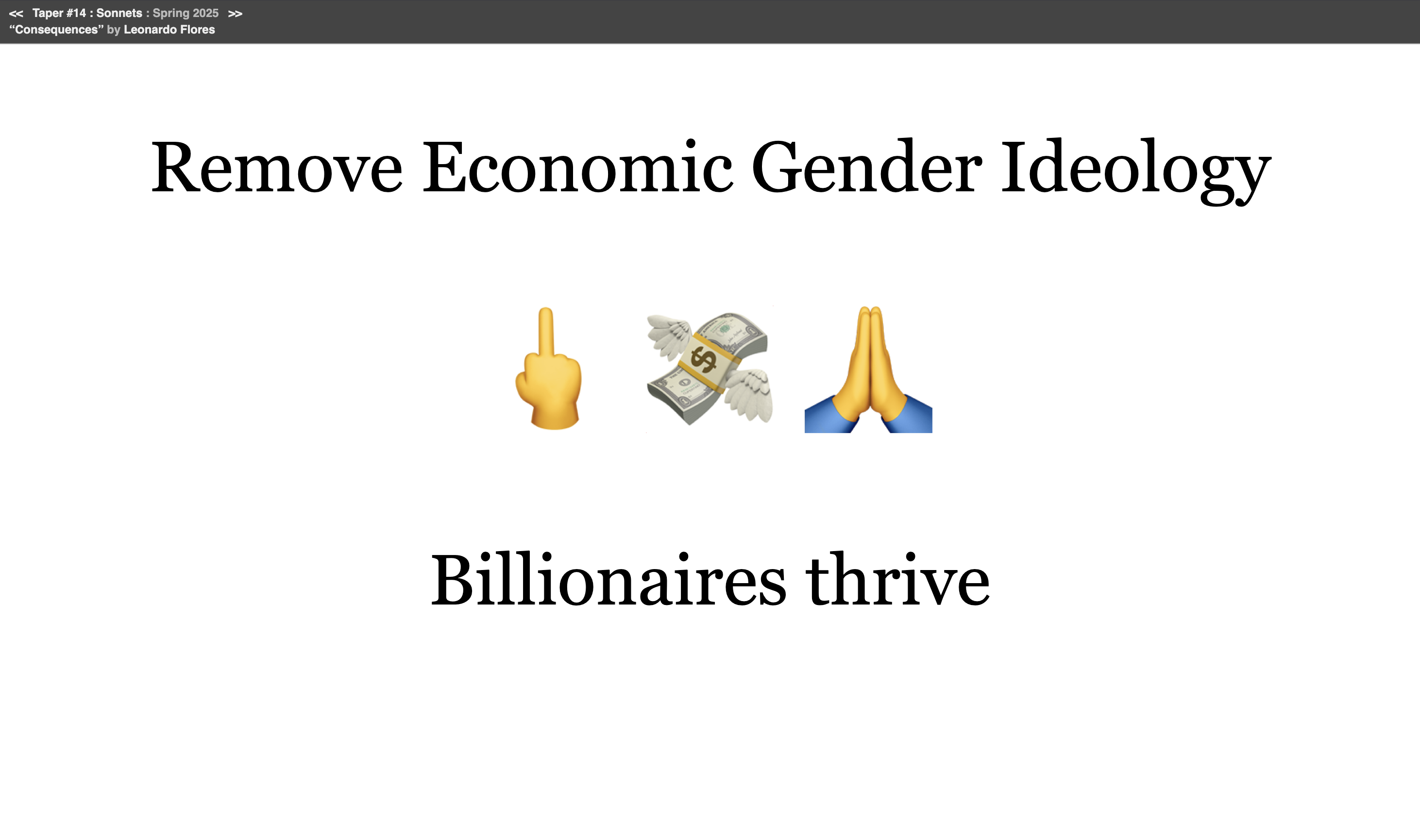
<p><img src="/images/wp-content/uploads/2026/02/consequences.png" alt="Screenshot of Consequences generative presidential actions piece" style="max-width: 400px; display: block; margin: 1rem 0;"></p>
<p>"Consequences" critiques Trump's first 100 Presidential Actions taken in his first 14 days in office by taking their titles (from the White House website), extracting their nouns, verbs, and adjectives and using them as data to generate new speculative Presidential actions. The emoji choices are a reference to Signalgate, which offered insight into the government officials and President responsible for these actions.</p>
<p>Published in <a href="https://taper.badquar.to/14/"><em>Taper</em> #14: Sonnets</a>.</p>

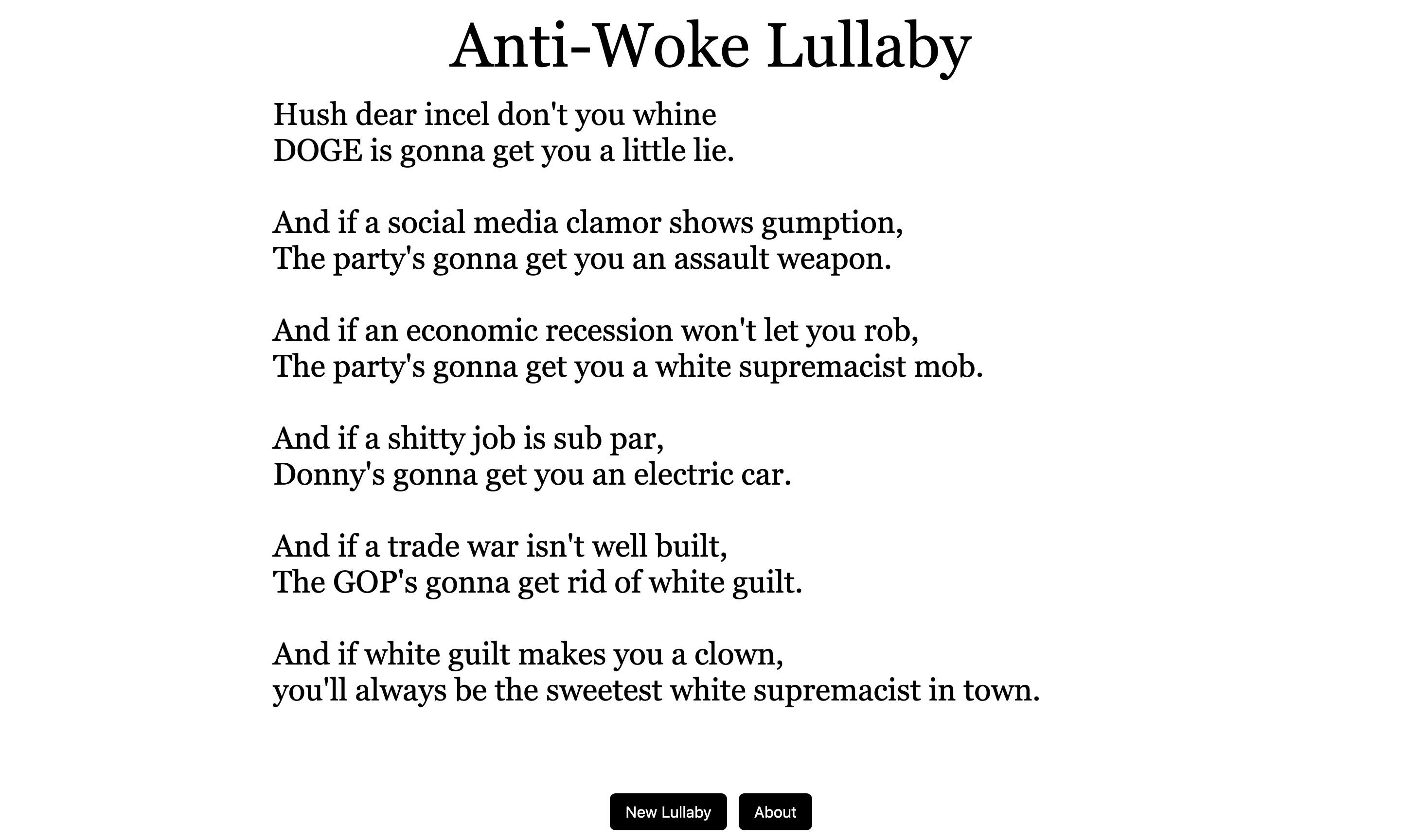
<h3><a href="https://sites.lsa.umich.edu/mqr/2026/01/punch-flag-fire-and-anti-woke-lullaby/">Anti-Woke Lullaby</a></h3>
<p><img src="/images/wp-content/uploads/2026/02/antiwokelullaby.png" alt="Screenshot of Anti-Woke Lullaby generative poem" style="max-width: 400px; display: block; margin: 1rem 0;"></p>
<p>"Anti-Woke Lullaby" is a generative digital poem that repurposes the structure of the traditional lullaby "Hush, Little Baby" to critique political complacency. It was written as a response to all the right wing attacks on so-called woke culture. My idea was to unpack and reverse the metaphor: if seeing injustice and deciding to do something about it is to awaken, then those who benefit or from or don't care about the injustice must want to go back to sleep. This lullaby is for them.</p>
<p>Published in <a href="https://sites.lsa.umich.edu/mqr/"><em>Michigan Quarterly Review</em></a>. Issue 64:4. Fall 2025 online folio.</p>

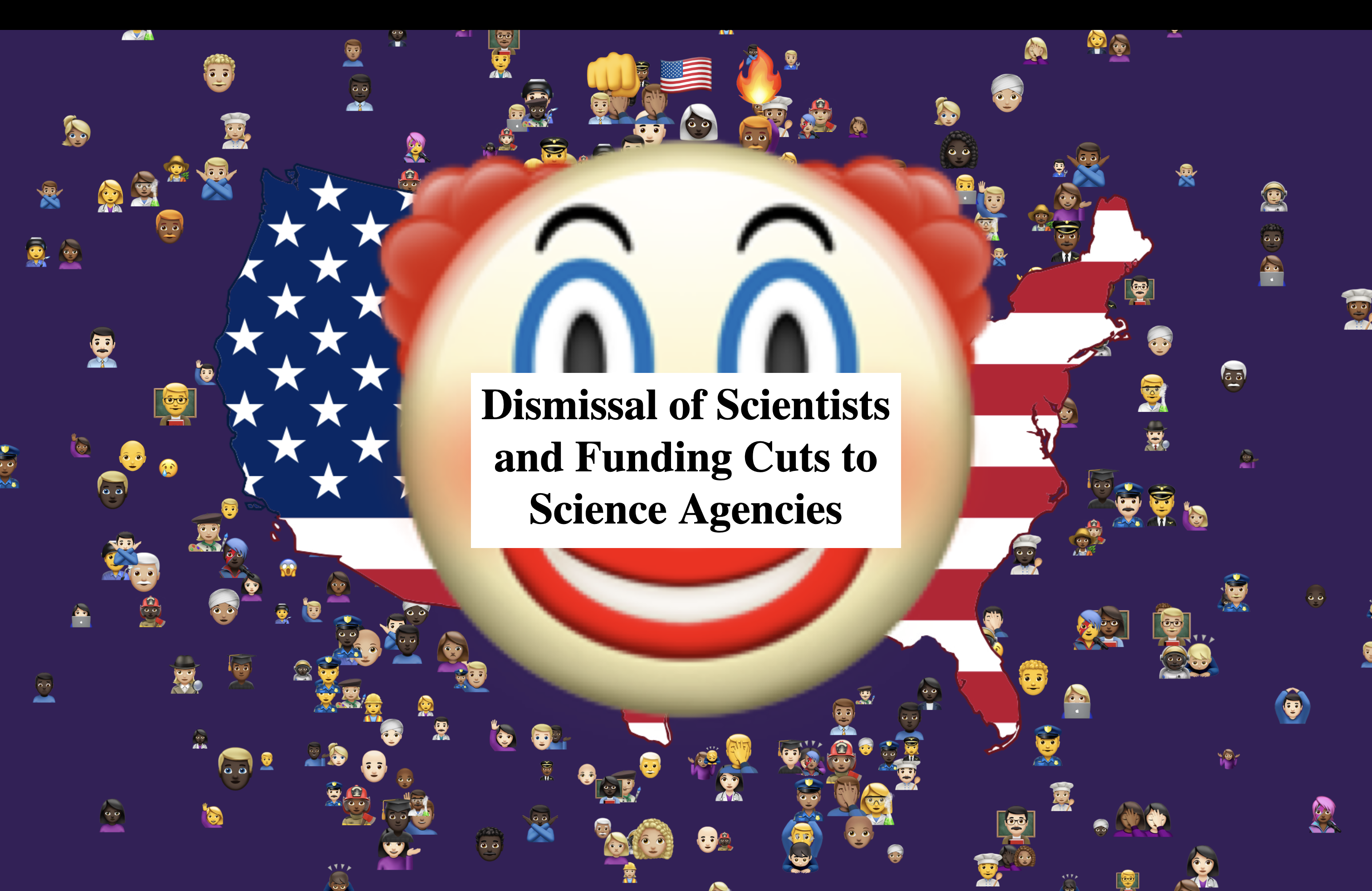
<h3><a href="https://sites.lsa.umich.edu/mqr/2026/01/punch-flag-fire-and-anti-woke-lullaby/">Punch Flag Fire</a></h3>
<p><img src="/images/wp-content/uploads/2026/02/punchflagfire.png" alt="Screenshot of Punch Flag Fire digital poem" style="max-width: 400px; display: block; margin: 1rem 0;"></p>
<p>"Punch Flag Fire" is a critique of the measures enacted by President Trump and his government that results in the massive loss of immigrants and citizens, impoverishing the U.S.A. through workforce, talent, and brain drain, while attracting and enriching oligarchs. Michael Waltz's now viral emoji trio (👊🇺🇸🔥) represents the attitude (and ineptitude) of Trump and his administration, as they do lasting damage to the country through measures meant to further their toxic agenda.</p>
<p>Published in <a href="https://sites.lsa.umich.edu/mqr/"><em>Michigan Quarterly Review</em></a>. Issue 64:4. Fall 2025 online folio.</p>

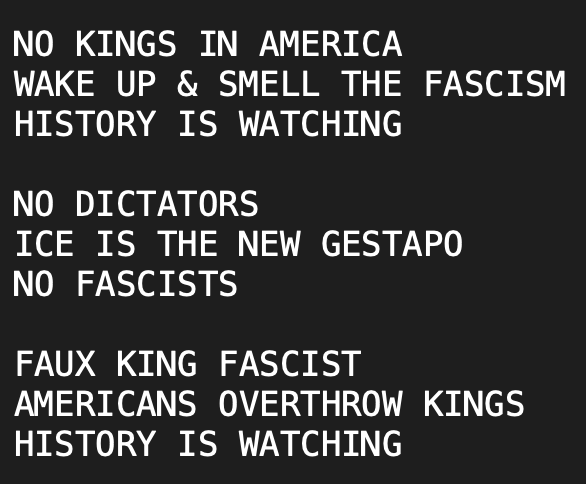
<h3><a href="https://badquar.to/publications/run_run_run.html">No Kings Haiku</a></h3>
<p><img src="/images/wp-content/uploads/2026/02/nokingshaiku.png" alt="Screenshot of No Kings Haiku Python script output" style="max-width: 400px; display: block; margin: 1rem 0;"></p>
<p>"No Kings Haiku" makes a selection of real slogans from the No Kings protests, organizes them as short and long (variables a & b, respectively) and randomly generates haiku with a minimalist Python script. The resulting haikus draw attention to the common ideas and the use of the poetic function of language used in protest slogans. Here's the Python script, which you can run in your computer's terminal or an online <a href="https://www.educative.io/compilers/python">Python compiler</a>:</p>
<pre><code>a=['NO KINGS','NO DICTATORS','NO TYRANTS',
'SAVE OUR DEMOCRACY','LOVE TRUMPS HATE','NO FAUX KING WAY',
'NO KINGS IN AMERICA','FAUX KING FASCIST','ABOLISH ICE'
'WE ARE ALL IMMIGRANTS','VETERANS AGAINST TRUMP',
'POWER TO THE PEOPLE','WE THE PEOPLE ARE PISSED',
'NO CROWN FOR THE CLOWN','PROTEST IS PATRIOTIC',
'TRUMP IS TOXIC','HISTORY IS WATCHING','NO FASCISTS']
b=['AMERICANS OVERTHROW KINGS','ICE IS THE NEW GESTAPO',
'NO FELON IN THE WHITE HOUSE','RISE UP AGAINST FASCISM',
'NO THRONES NO CROWNS NO KINGS','NOT MY CIRCUS NOT MY KING',
'WAKE UP & SMELL THE FASCISM','HISTORY HAS ITS EYES ON YOU',
'EL PUEBLO UNIDO JAMAS SERA VENCIDO',]
import random
c = random.choice(a)
d = random.choice(b)
e = random.choice(a)
print(c+'\n'+d+'\n'+e)</code></pre>
<p>Published in <a href="https://badquar.to/publications/run_run_run.html"><em>Run Run Run</em></a>.</p>

<h3><a href="https://remediatelitmag.xyz/issue4/">Tiny Protests: No Kings</a></h3>
<p><img src="/images/wp-content/uploads/2026/02/tinyprotestsnokings.png" alt="Screenshot of Tiny Protests: No Kings emoji animation" style="max-width: 400px; display: block; margin: 1rem 0;"></p>
<p>"Tiny Protests: No Kings" makes use of emoji, animation, and the passage of time to tell a story, much as I did in earlier iterations of Tiny Protests & Protestitas. It commemorates the No Kings protest movement in the USA, particularly the massive nationwide protests on June 14 and October 18, 2025. All the slogans are drawn from signs in photos documenting these protests across the nation. The work also critiques how President Trump has responded to peaceful protests in Los Angeles, Portland, Chicago, and other locations. The work has 5 movements, so it takes about 3 minutes to get a sense of the narrative arc it is presenting and critiquing. The work restarts after 6 minutes.</p>
<p>Published in <a href="https://remediatelitmag.xyz/issue4/"><em>RE-MEDIATE</em> #4</a>. Fall 2025.</p>

<h3><a href="https://taper.badquar.to/15/encounters.html">Encounters</a></h3>
<p><img src="/images/wp-content/uploads/2026/02/encounters.png" alt="Screenshot of Encounters generative emoji narrative" style="max-width: 400px; display: block; margin: 1rem 0;"></p>
<p>"Encounters" offers generative emoji-driven narratives about the impact (every pun intended) encounters with other people can have on our state of mind. The work unfolds endlessly, producing many stories of how people are affected by the people they encounter at a crossroads.</p>
<p>Published in <a href="https://taper.badquar.to/15/"><em>Taper</em> #15: Crossroads</a>.</p>

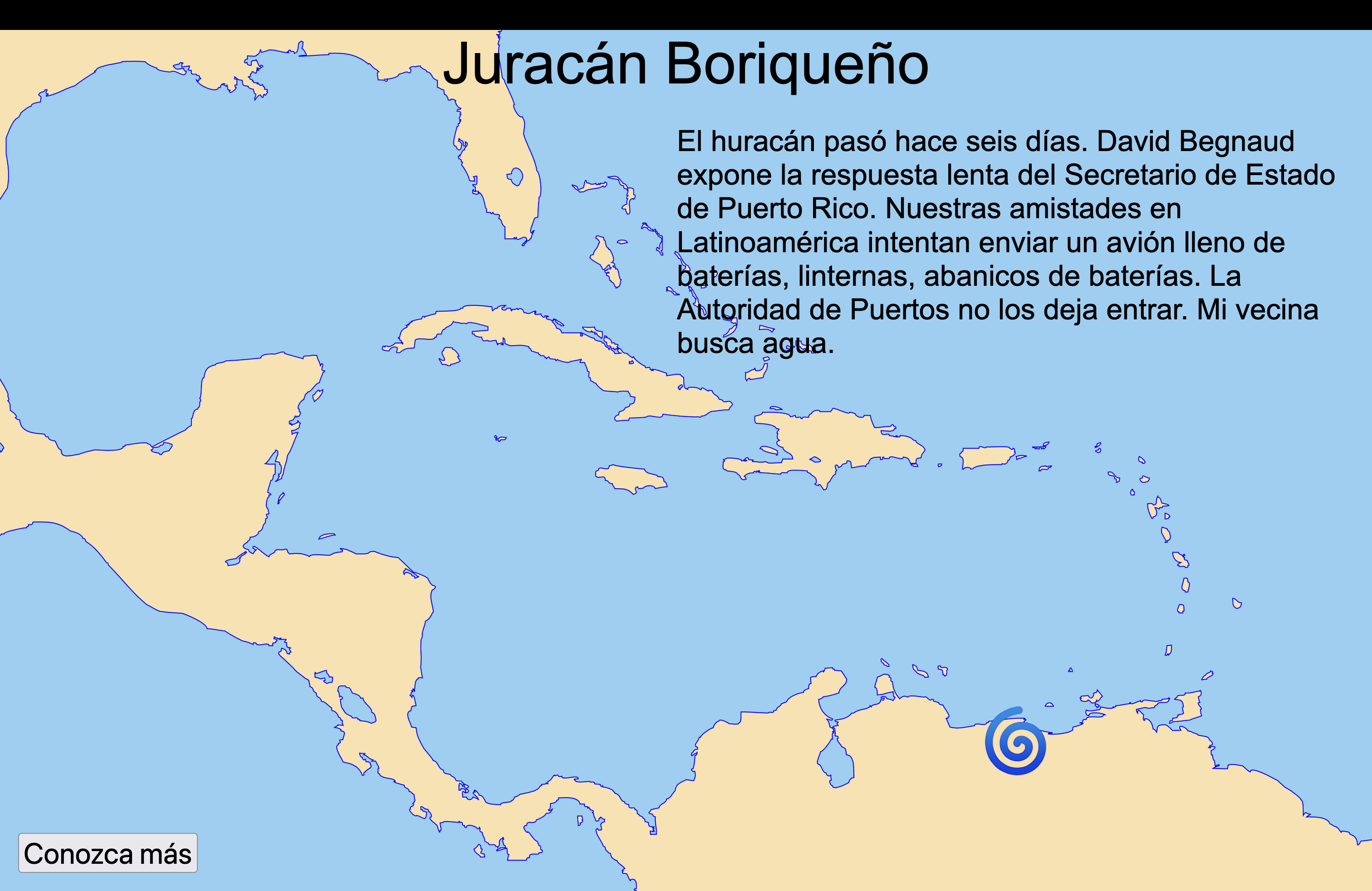
<h3><a href="https://antologia.litelat.net/volumen2/es/37_Juracan-Borinqueno.html">Juracán Borinqueño</a></h3>
<p><img src="/images/wp-content/uploads/2026/02/juracan.png" alt="Screenshot of Juracán Borinqueño generative hurricane scenario" style="max-width: 400px; display: block; margin: 1rem 0;"></p>
<p>I first wrote this piece as a Twitter bot in September 2018 to commemorate the anniversary of Hurricane María's devastating passage through Puerto Rico in 2017. When Twitter was destroyed by Elon Musk (X marks the spot where Twitter is buried) and Cheap Bots Done Quick! became inoperable, I ported it to a standalone HTML piece in early 2023 (read about it <a href="https://leonardoflores.net/posts/blog/creative-work/rescued-and-renewed-works-taco-hell-menu-tiny-protests-jurakan-borinqueno-protestitas-and-a-bonus.html">here</a>). This work generates speculative scenarios before, during, and after the passing of a hurricane through Puerto Rico, based on my vivencias (lived experience). The work is in Spanish, but the browser can translate it automatically, if needed.</p>
<p>Published in <a href="https://antologia.litelat.net/volumen2/"><em>Antología Lit(e)Lat, Volumen 2</em></a>.</p>

<h3><a href="https://antologia.litelat.net/volumen2/es/73_protestitas.html">Protestitas 2023</a></h3>
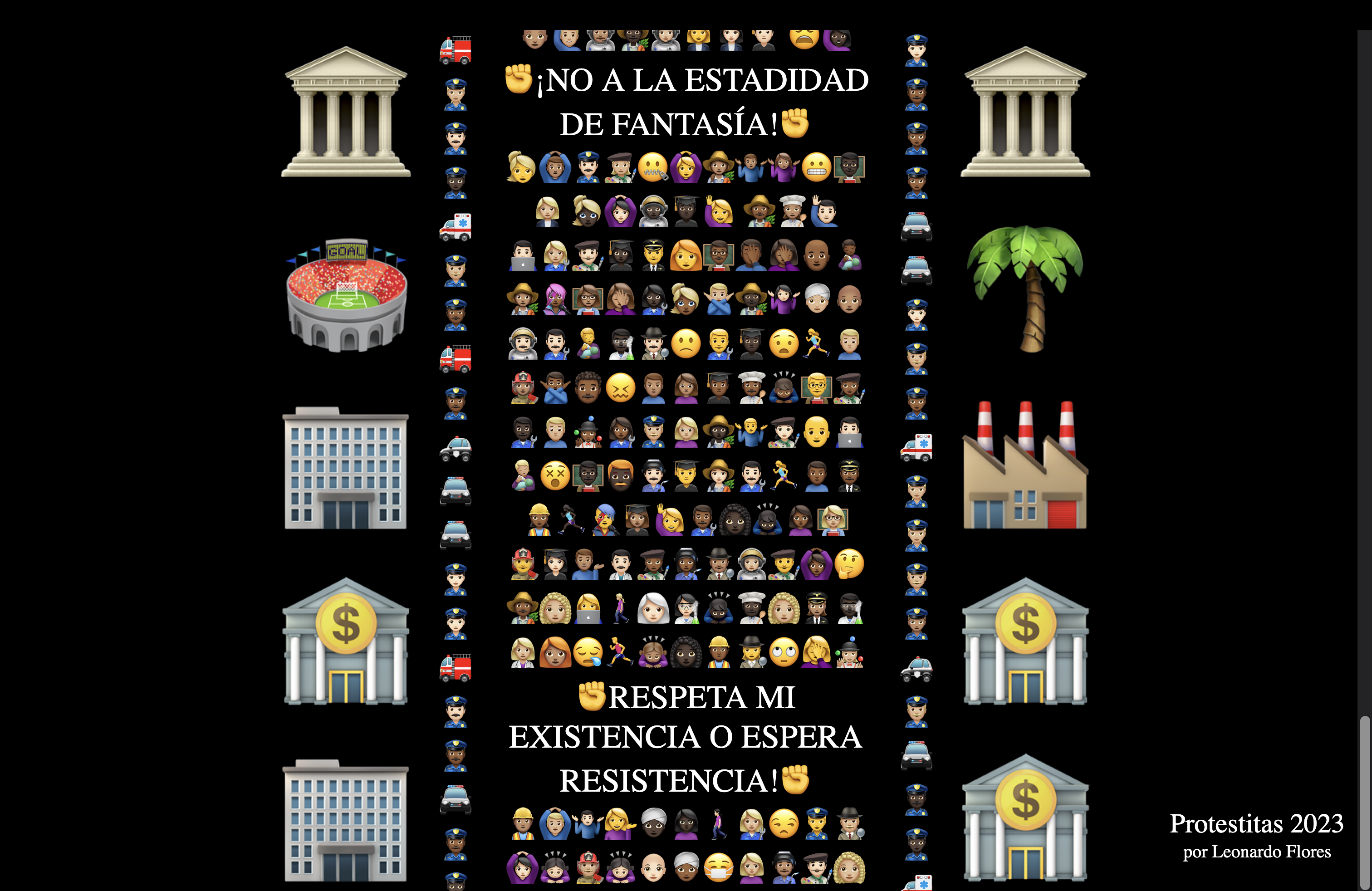
<p><img src="/images/wp-content/uploads/2026/02/tinyprotests2023.png" alt="Screenshot of Protestitas 2023 protest march generator" style="max-width: 400px; display: block; margin: 1rem 0;"></p>
<p>"Protestitas 2023" generates an endless protest march on your browser in which angry Puerto Rican protesters march down a street chanting protest slogans on a variety of topics they are angry about. All protest slogans are drawn from real protests in Puerto Rico. This is partly a rescue from the original Twitter bot @Protestitas, partly an updated work and HTML reimplementation dealing with issues in 2023.</p>
<p>Published in <a href="https://antologia.litelat.net/volumen2/"><em>Antología Lit(e)Lat, Volumen 2</em></a>.</p>

<h3><a href="https://antologia.litelat.net/volumen2/es/36_Its_Complicated.html">It's Complicated</a></h3>
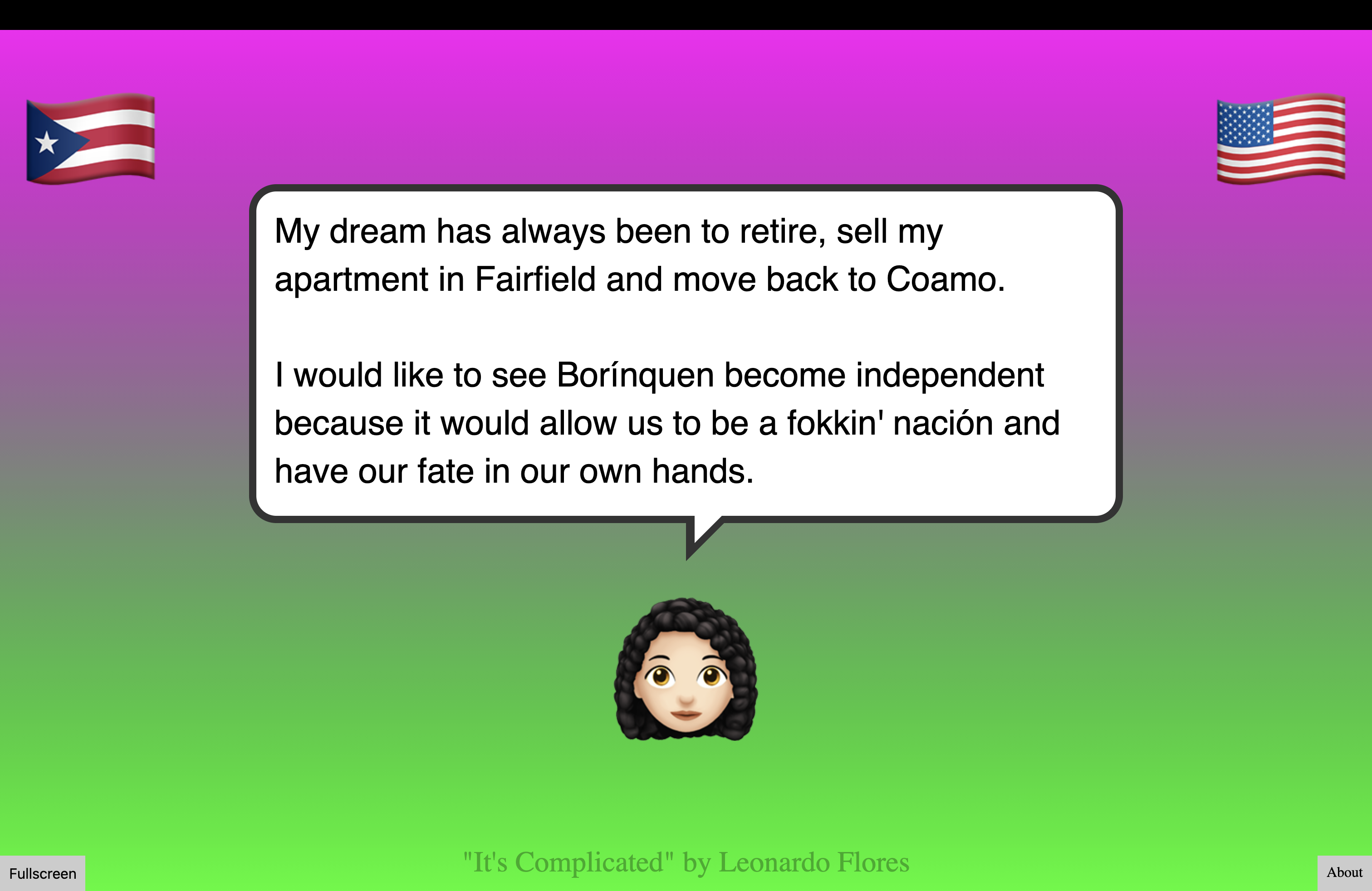
<p><img src="/images/wp-content/uploads/2026/02/itscomplicated.png" alt="Screenshot of It's Complicated generative opinion piece" style="max-width: 400px; display: block; margin: 1rem 0;"></p>
<p>"It's Complicated" is inspired by a lifetime of considering and debating the issue of Puerto Rico's status in relation to the U.S. The work generates a hypothetical Puerto Rican who talks about their provenance and then expresses an opinion for or against statehood, commonwealth, or independence for Puerto Rico. It was originally published in 2023 in <em>The Los Angeles Review</em>.</p>
<p>Re-published in <a href="https://antologia.litelat.net/volumen2/"><em>Antología Lit(e)Lat, Volumen 2</em></a>.</p>

<p>All of these works were vibe-coded using Chat GPT, except for "No Kings Haiku" which was hand-coded. They are all examples of what I call Cyborg Digital Writing. If you're interested in learning how to do it, check out <a href="https://leonardoflores.net/posts/blog/resources/a-cyborg-digital-writing-primer.html">this resource I created</a>.</p>]]></content><author><name></name></author><category term="creative-work" /><summary type="html"><![CDATA[Last year was as wonderfully productive for my creative work as it was politically challenging, leading to a record number of works created and published. Here's a brief writeup of my published cre...]]></summary></entry><entry><title type="html">Leo @ MLA 2026 Convention</title><link href="https://leonardoflores.net/posts/blog/presentations/leo-mla-2026-convention.html" rel="alternate" type="text/html" title="Leo @ MLA 2026 Convention" /><published>2026-01-08T00:00:00+00:00</published><updated>2026-01-08T00:00:00+00:00</updated><id>https://leonardoflores.net/posts/blog/presentations/leo-mla-2026-convention</id><content type="html" xml:base="https://leonardoflores.net/posts/blog/presentations/leo-mla-2026-convention.html"><![CDATA[<div class="post-content">
            <p>For the 2026 MLA convention, I will participate in two workshops and two panels. Here are the details:</p><h4>Workshop: Planning for What’s Next with AI on Your Campus</h4><p>Drawing on the work of the MLA’s AI task forces, this workshop will explore how generative AI affects scholarship, teaching, academic labor, and marginalized student populations, and the critical stances that have developed in response. After lightning talks, participants will join discussion groups to develop pedagogies, policies, or program recommendations to take home to their institutions.</p><ul><li>Thursday, January 8 – 8:30-11:00 am in Fairmont Royal York – Salon B</li><li><a href="https://mla.confex.com/mla/2026/meetingapp.cgi/Session/23424">Link to workshop @ MLA</a></li></ul><h4>Presentation: What the FOSS? Lessons from the Electronic Literature Community on Creating Open Access Software</h4><p>In this presentation I argue that the electronic literature (elit) community offers a vital model for how the humanities can ethically navigate generative AI by embracing free and open-source software (FOSS) principles. Drawing on Montfort and Wardrip-Fruin’s Acid-Free Bits white paper from 2004, I identify elit practices they highlight– such as using open-source platforms, documentation, code validation and porting, using plain-text rather than compiled code, and more– to create and sustain creative work despite waves of technological obsolescence. Using the computational poetry journal <em>Taper</em> as a case study, the talk shows how publishing software-like literary works under libre licenses fosters community, remix culture, and creativity in ways that will outlast work created with proprietary, corporately developed software. Extending these lessons to the AI era, it proposes that adopting open-source methodologies and engaging with accessible models such as OLMo 2 can help humanists shift from passive consumption to transparent, collaborative, and community-driven knowledge production. The FOSS ethos thus equips humanities research not only to survive technological change but to help shape a more equitable and open digital ecosystem.</p><ul><li>Thursday, January 8 – 3:30-4:45 in <span>MTCC – 206F </span></li><li>Panel: <a href="https://mla.confex.com/mla/2026/meetingapp.cgi/Session/22541">Open Source Humanities in the Age of AI</a></li><li>Here’s <a href="https://anastasiasalter.net/OpenSourceHumanities/">a link to a cool page with details on the panel</a>.</li><li>Here’s <a href="https://www.canva.com/design/DAG9qlZPFPc/7_n4VAoJfBK_m0JnWFihig/view?utm_content=DAG9qlZPFPc&utm_campaign=designshare&utm_medium=link2&utm_source=uniquelinks&utlId=h0f0f5abfed">a link to my slideshow</a>.</li></ul><h4>Workshop: When Do We Need to Know What Is AI and What Is Student Writing? How Can We Know?</h4><p>During this workshop, attendees learn about approaches to distinguishing student writing from AI and discouraging AI use that interferes with learning. Speakers address fairness and bias, instructor labor, student privacy, and teacher-student relationships and then conduct activities that explore designing for intrinsic motivation, multimodal assignments, ungrading, proctored writing, process tracking, and AI detection.</p><ul><li>Friday, January 9 – 8:30-9:45 – online</li><li><a href="https://docs.google.com/presentation/d/1hkhPeTTeECLgLTbgeX8ZPOHiYBEu_9zfWVtOIuHeUyA/edit?slide=id.g3b4bb3f375c_0_100#slide=id.g3b4bb3f375c_0_100">Link to slides</a></li><li><a href="https://mla.confex.com/mla/2026/meetingapp.cgi/Session/23427">Link to workshop @ MLA</a></li></ul><h4>Panel: Student-Centered AI and DH Practices</h4><p>I will be presiding this panel, which I convened as part of my work in the <a href="https://www.mla.org/About-Us/Governance/Committees/Committee-Listings/Professional-Issues/Committee-on-Information-Technology">MLA Committee on Information Technology</a>.</p><ul><li>Sunday, January 11 – 12:00-1:15 in MTCC – 705</li><li><a href="https://mla.confex.com/mla/2026/meetingapp.cgi/Session/22972">Link to Panel @ MLA</a></li></ul>
            </div>]]></content><author><name></name></author><category term="presentations" /><summary type="html"><![CDATA[For the 2026 MLA convention, I will participate in two workshops and two panels. Here are the details:]]></summary></entry><entry><title type="html">Presentación: La literatura electrónica y su adopción social</title><link href="https://leonardoflores.net/posts/blog/presentations/presentacion-la-literatura-electronica-y-su-adopcion-social.html" rel="alternate" type="text/html" title="Presentación: La literatura electrónica y su adopción social" /><published>2025-09-19T00:00:00+00:00</published><updated>2025-09-19T00:00:00+00:00</updated><id>https://leonardoflores.net/posts/blog/presentations/presentacion-la-literatura-electronica-y-su-adopcion-social</id><content type="html" xml:base="https://leonardoflores.net/posts/blog/presentations/presentacion-la-literatura-electronica-y-su-adopcion-social.html"><![CDATA[<p>El viernes, 19 de septiembre de 2025, estaré dando una ponencia titulada “La literatura electrónica y su adopción social” como parte del panel “La formación del campo crítico” en el <a href="https://litelat.net/red-litelat-seguimos-maquinando/">Encuentro Red Lit(e)Lat: 10 Años Maquinando</a> en la UNTREF en Buenos Aires, Argentina.</p><p>Aquí está <a href="https://www.canva.com/design/DAGzbFvjBZ8/RLrv7CDS7LtNc7rRE0DWPg/view?utm_content=DAGzbFvjBZ8&utm_campaign=designshare&utm_medium=link2&utm_source=uniquelinks&utlId=hdf81cc6ac3">el enlace para la presentación</a>.</p>]]></content><author><name></name></author><category term="presentations" /><category term="en-espanol" /><summary type="html"><![CDATA[El viernes, 19 de septiembre de 2025, estaré dando una ponencia titulada “La literatura electrónica y su adopción social” como parte del panel “La formación del campo crítico” en el Encuentro Red L...]]></summary></entry><entry><title type="html">Public Lecture: The Importance of Digital Writing in the Age of AI</title><link href="https://leonardoflores.net/posts/blog/news/public-lecture-the-importance-of-digital-writing-in-the-age-of-ai.html" rel="alternate" type="text/html" title="Public Lecture: The Importance of Digital Writing in the Age of AI" /><published>2025-08-15T00:00:00+00:00</published><updated>2025-08-15T00:00:00+00:00</updated><id>https://leonardoflores.net/posts/blog/news/public-lecture-the-importance-of-digital-writing-in-the-age-of-ai</id><content type="html" xml:base="https://leonardoflores.net/posts/blog/news/public-lecture-the-importance-of-digital-writing-in-the-age-of-ai.html"><![CDATA[<p>On August 14, 2025, I offered a public lecture at IIT Jodhpur, titled “The Importance of Digital Writing in the Age of AI” as part of my <a href="/posts/blog/news/leo-iit-jodhpur/">Fulbright Specialist Program visit</a>. Here’s a video recording of the lecture:</p><p><iframe title="The Importance of Digital Writing in the Age of AI" src="https://www.youtube.com/embed/bWMbHUX4Tk0?feature=oembed"></iframe></p><p>This lecture and visit was made possible the <a href="https://fulbrightspecialist.worldlearning.org/">Fulbright Specialist Program</a>, <a href="https://www.usief.org.in/">The United States-India Educational Foundation</a>, and my IIT Jodhpur hosts: <a href="https://www.iitj.ac.in/school-of-liberal-arts">the School of Liberal Arts</a> and the following faculty in the Digital Humanities program: Parichay Patra, Natasa Thoudam, and Tonisha Guin.</p>]]></content><author><name></name></author><category term="news" /><category term="presentations" /><summary type="html"><![CDATA[On August 14, 2025, I offered a public lecture at IIT Jodhpur, titled “The Importance of Digital Writing in the Age of AI” as part of my Fulbright Specialist Program visit. Here’s a video recording...]]></summary></entry></feed>